
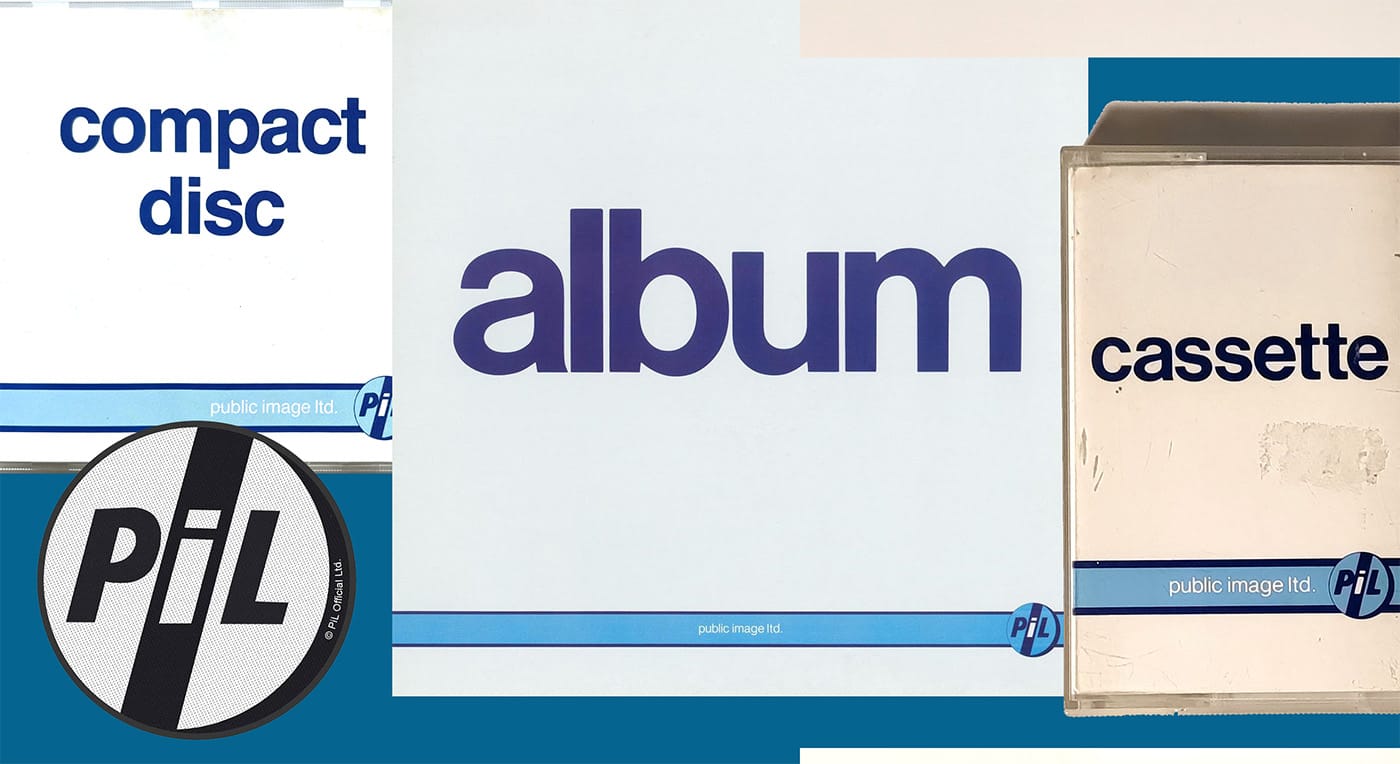
Album. Yes, that is quite literally the name of this record. Though depending on the format you purchased back then, you might know it as Cassette or Compact Disc.

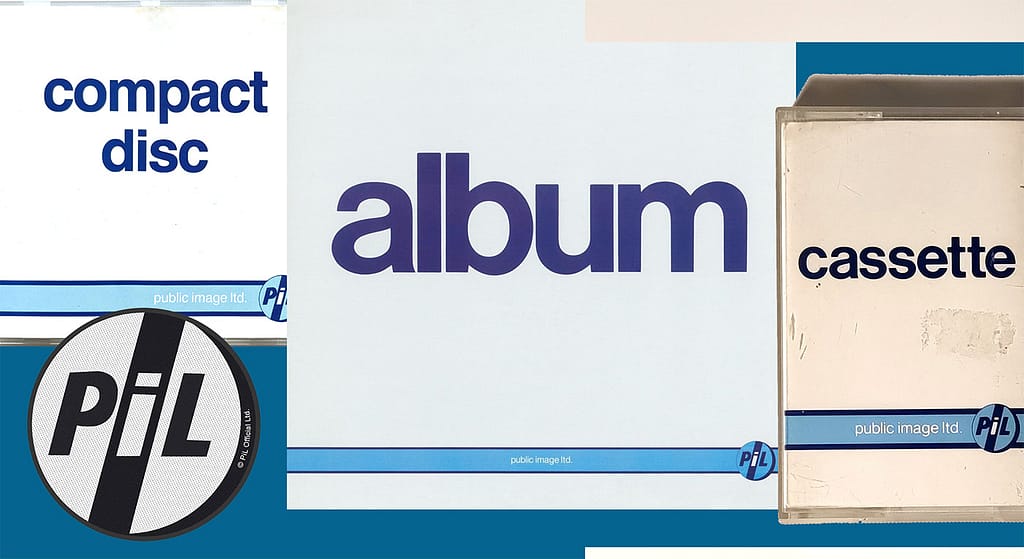
Album is the fifth studio outing from Public Image Ltd (PiL). It was triggered a burning question at the time: had John Lydon (An Artist formerly known as Johnny Rotten) compromised his identity to sell more records?
We should probably cast our minds back to the persona he first presented to the world. Before judging whether he changed or not.
Flashback to 1977
In the mid-1970s, British society was gripped by a severe economic and social crisis.
Earning the grim moniker “the sick man of Europe”. Widespread strikes and protest marches by both trade unions and political factions cast a distinctly dystopian shadow over daily life.
Confronted with such a bleak reality, the youth harboured intense rage, despair, and anti-social resentment, giving birth to punk culture. This movement was underpinned by the fiercely independent DIY (Do-It-Yourself) ethos, where technical proficiency was completely discarded. If you could play three chords, you had a band! There was no room for the grand, self-indulgent guitar heroics of yesteryear, which punks dismissed as mere ego trips.
Never Mind the Bollocks, was a barrage of raw rock, distorted chords, and snarling, shouted vocals that perfectly channelled the youth’s societal grievances. When it dropped, John Lydon (then Johnny Rotten) was just 21 years old, brash, impetuous, and fiercely unfiltered. However, as the 1970s waned, the social landscape shifted dramatically as the UK entered the era of Margaret Thatcher. The “Iron Lady” who pioneered neoliberalism (Thatcherism). Economic revitalisation came at a heavy cost. The suppression of trade unions and aggressive privatisation. While across the Atlantic, Ronald Reagan championed a revival of intense nationalism and staunchly conservative economics.
As society transformed, the anti-social fury of punk mutated, absorbing diverse cultural influences to morph into post-punk, new wave, and the New Romantic movement. Eddie Van Halen turned the rock landscape into a battlefield for high-octane guitar virtuosos. MTV propelled flamboyant glam metal into the mainstream. Punk in the UK shrank into a niche subculture, while in America, it retreated into the underground hardcore scene.
Fast Forward to 1986
John Lydon kept making music even after the Sex Pistols imploded in 1978. He formed Public Image Ltd (PiL), Retaining an anti-establishment edge, embraced surrounding musical currents to morph into a pioneering post-punk and sonic experimental vehicle with a revolving door of members.
When co-founder Keith Levene quit after This Is What You Want… This Is What You Get, it dealt a massive blow to the band. John later admitted in interviews that he seriously contemplated folding PiL to go solo. Virgin Records offered little support and pressured them towards a more accessible, commercial pop sound.
Yet during this turbulent transition, John accepted an invitation from hip-hop pioneer Afrika Bambaataa to collaborate on the Time Zone project.
This project introduced John to Bill Laswell, the bassist and producer. He paving the way for Bill to steer PiL’s next record.
Bill Laswell
Bill Laswell was a formidable bassist who had established himself in New York City during the late 1970s. Balancing live performance with a burgeoning production career. He collaborated with numerous experimental and avant-garde artists yet possessed a keen ear for pop sensibilities. His production on Herbie Hancock’s 1983 hit Future Shock was a resounding commercial success.

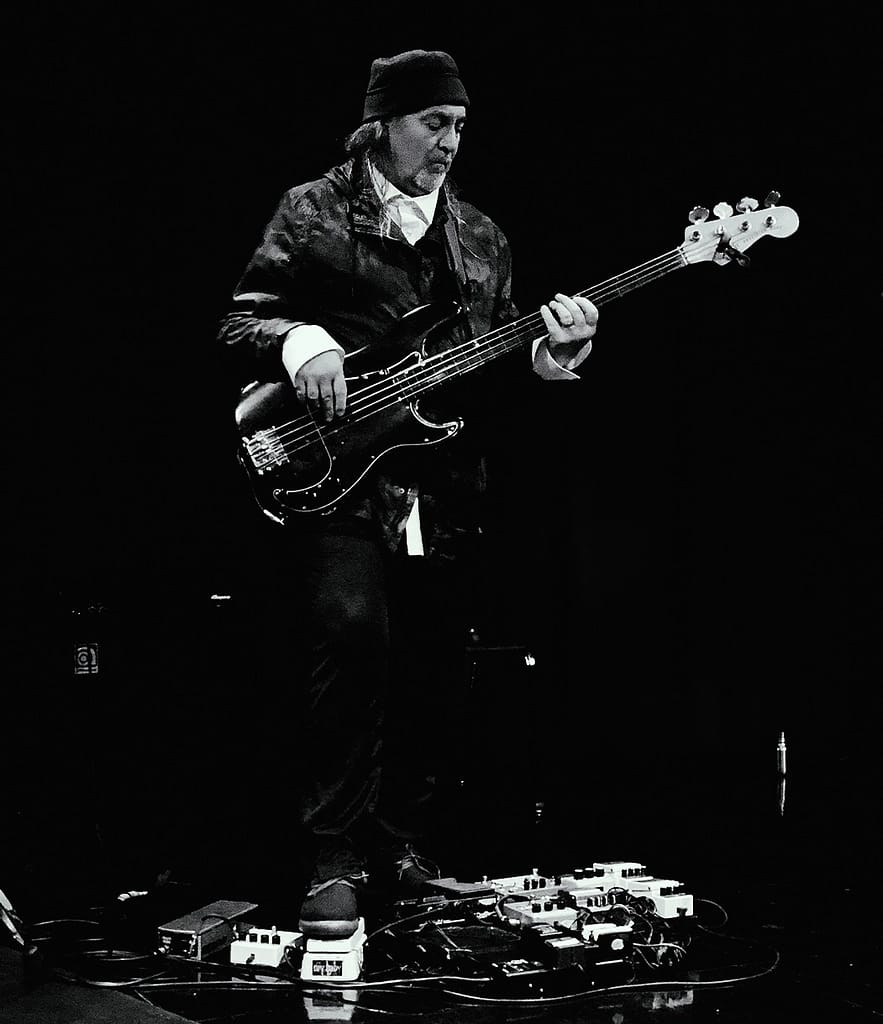
Bill also fronted the musical collective Material, gathering virtuoso players to serve as backing musicians or record original tracks that seamlessly blended progressive rock, jazz, no wave, post-punk, funk, hip-hop, dub, world music, and the avant-garde. He was arguably one of the most versatile and accomplished musicians in NYC. The ideal anchor for John Lydon, who was steering PiL entirely on his own for the very first time.
Previously, while John’s face was the band’s unmistakable brand, Keith Levene’s role had been equally pivotal. Keith had sculpted the band’s foundational identity by weaving dub and krautrock into a distinct sonic signature. He was no conventional guitar hero, but his meticulous, jagged arrangements stood out uniquely in the British post-punk rock landscape. With his departure, PiL lost the specific musical identity that set them apart from the post-punk crowd.
Worse still, the musical climate of the mid-1980s was no longer on John’s side. Mainstream music had entered an industrialised era dictated by MTV playlists. The raw DIY philosophy was superseded by massive, glossy production values. Combined with strained relations with Virgin Records, John faced immense uncertainty, yet he began writing and rehearsing new material in the basement of his Venice Beach home alongside his 1984–1985 touring bandmates, keyboardist Jebin Bruni and guitarist Mark Schulz.
All about Music
However, when the trio arrived in New York to cut the album, they discovered Laswell had already mapped out the entire project with pre-recorded demo tapes. Bill had recruited seasoned session heavyweights: legendary Miles Davis drummer Tony Williams, Material guitarist Nicky Skopelitis, and Bill himself handling bass duties. They had already laid down backing tracks for what would become “FFF”, “Home”, and “Rise” to show the intended musical direction.
Faced with such formidable, highly experienced virtuosos, both Jebin and Mark succumbed to the immense pressure of a high-stakes studio environment, unable to deliver what Bill demanded. Consequently, PiL was whittled down to a solo endeavour for John, backed entirely by elite session musicians.
Farewell Fairweather Friend
Under Bill Laswell’s meticulous production, the resulting music was impeccably recorded, boasting intricately arranged harmonies that expertly blended seemingly incompatible elements into a cohesive, sophisticated whole. The opening track, “F.F.F.”, boldly declared this new direction while keeping a foot in their rebellious past. Standing for Farewell Fairweather Friend, whoever John’s bitter targets were, the underlying resentment remained fiercely “anti-rock” (if we are to avoid calling it punk).
At a casual listen, John’s delivery feels familiar spitting out lyrics with his trademark rhythmically aggressive, almost-shouted precision. Yet repeated listens reveal a subtle evolution: he shifts his pitch and tone dynamically, locking perfectly into the groove. While the drumming remains heavy rock at its core, Tony Williams injects a subtle jazz-fusion fluidity that keeps the beats constantly alive, propelled forward by a remarkably supple bassline.
This marks a stark departure from their earlier catalogue. While superficially resembling post-punk, the arrangement is crafted with the grandeur of big-budget pop-rock production. Steve Vai’s guitar work is the most glaring departure; his dazzling technical virtuosity, crystal-clear harmonics, and precise whammy-bar inflections are juxtaposed against deliberate pauses that let the bass breathe. By grafting guitar heroics onto abrasive post-punk arrangements, the music achieved a fresh, muscular power far removed from the muddy walls of sound of their youth.
It is hardly surprising that critics accused John Lydon of selling out. Here was a punk pioneer, who once despised technical virtuosity, collaborating with master session musicians within a pristine, polished production environment that discarded chaotic noise for clean separation. This was post-punk striding confidently into the mainstream, where the distinct, moody British post-punk flavour evaporated, replaced by an Americanised rock sheen that would later lay the groundwork for alternative rock.
Rise
If “F.F.F.” broke the ice, “Rise” hammered home just how radically PiL had evolved. Anchored by a South African township rhythm, Bill layered in hypnotic, Indian-style melodic repetitions alongside L. Shankar’s Celtic-flavoured violin work. The soaring backing vocal chant, ‘may the road rise with you’, was adapted from a traditional Irish blessing (John, though London-born, was raised by Irish parents). Chanted by Bernard Fowler (then of Material, later a long-time backing vocalist for The Rolling Stones), these smooth, elongated harmonies contrasted beautifully with John’s sharp, staccato delivery, creating an entirely unprecedented choral dynamic for the band.
John drew lyrical inspiration from harrowing news reports of apartheid atrocities in South Africa. The crisis was so severe that the United Nations called for global boycotts, urging artists and media to shun the regime. When Queen infamously played Sun City during this period, they faced massive backlash, including fines from the British Musicians’ Union and widespread bans.

Haunted by the brutal methods used to torture Black activists depicted in documentaries and news broadcasts, John penned the searing line: ‘They put a hot wire to my head, ‘Cos of the things I did and said’. It was a visceral reaction to systemic human cruelty. Yet, upon reflection, John realised that raw rage is ultimately futile if it fails to catalyse tangible change.
Anger is an energy
This realisation birthed the iconic manifesto: ‘Anger is an energy’. This captured the evolution of John Lydon. His subject matter remained as heavy, tense, and unyielding as it was when the world knew him as Johnny Rotten. However, as a matured individual with broader life experience, he chose to wrap these dark themes in a pop sensibility to reach a far wider audience via radio and MTV, making it PiL’s greatest commercial triumph.
Weaponising pop music as a vehicle for political messaging might be dismissed by purists as a compromise. View it from another angle, however, and it is precisely what allowed this fury to travel further than raw noise ever could, reaching audiences who would otherwise look away. When stepping back to look at the album as a whole, the anger of a 30-year-old man feels fundamentally different from that of a 21-year-old youth. As Johnny Rotten, he screamed furiously that there was “no future” left for them, so they might as well tear everything down. In that era, the abrasive, three-chord assault of Never Mind the Bollocks perfectly mirrored the raw, reckless honesty of youth.
It gave us a cathartic rush, but once you burn the house down, what comes next?
Album
As John grew older and society changed, he gained the maturity that comes with lived experience. The fire of anger was no longer something to be spent burning everything to ash. The anger and pain remain entirely real, but why let them consume us until we burn out? Instead, transform that rage into fuel to drive your life forward and create something new.
The underlying worldview remains pure John Lydon. What changed was not his anger, but how he chose to harness it: moving from three-chord punk to big-budget production, master musicians, and an 80s American rock aesthetic.
This is Album, Public Image Ltd’s fifth record, a testament to the fact that anger does not have to be a destructive fire; we can choose to use it as fuel to build something better.
Cite: Information at wikipedia